
Resource
45 posts currently live in this category.

Beyond the Surface: How to Engage with the Quiet Members of your Open Source Community
In the dynamic realm of community management, marketing, and developer relations, success depends upon more than just attracting attention. It's about fostering meaningful relationships, nurturing engagement, and amplifying your community's impact.
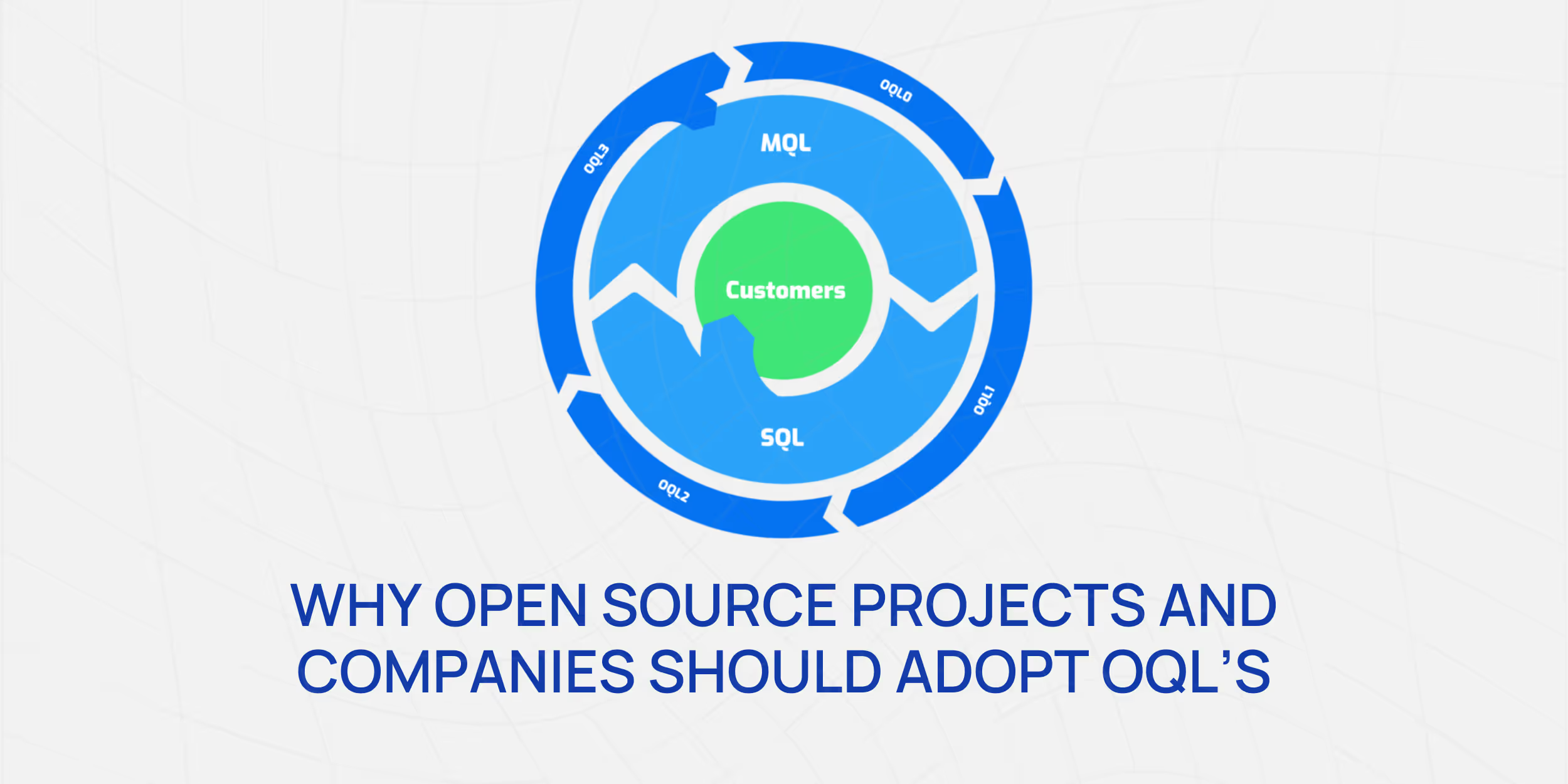
Why Open Source Projects and Companies Should Adopt "Open Source Qualified Leads"
The modern digital age, driven by the proliferation of open-source projects, is as much about community as it is about the code. This means understanding and engaging with potential adopters, contributors, and users becomes critical for the health and success of a project or product. Here enters the concept of "Open Source Qualified Leads" (OQL).

Mastering Telemetry in Open Source: A Simple Guide to Building Lightweight Call Home Functionality
Implementing a call-home functionality or telemetry within open-source software often raises privacy concerns within the community. Many parties, including enterprise security teams, customer advocates, and developers, express rightful apprehensions about the transmission, storage, and usage of data.

Open Source Metrics: Fear and Loathing (Part 2)
Collecting metrics and measuring the right things are hard. In the open source community it often seems like those involved in the project or community at large view any sort of data collection and analysis of their projects and community as an afterthought at best, or at worst a complete waste of time. Consider these two quotes I heard from people I know and respect in the community (protecting names for now):

Why GitHub Repos Are Not Enough for Your Docs: The Benefits of Creating a Dedicated Doc Site
Documentation is the backbone of any successful open-source project. It not only serves as a guide for developers and users but also acts as a vital marketing tool for attracting new users. However, many developers make the common mistake of using their GitHub repository as the primary source for documentation. In this blog, we will explore the limitations of using GitHub as your primary documentation source and the benefits of using your own docs site for hosting your project's documentation.

Data-Driven Open Source: Why You Should Care About Metrics (Part 1)
In the open source world, there seems to be a divide when it comes to using and valuing data. I've spoken with some big, well respected and known names in the open source community who often downplay, or even overlook, the importance of keeping track of metrics. Instead, they're all about building relationships, using open source to make the world a better place, or growing their own companies (which are noble and still good outcomes). The idea of using data to make decisions often ends up on the back burner or isn't considered at all.

Developer Relations (DevRel): Where Should It Reside in Your Organization
Establishing a robust Developer Relations (DevRel) team is a crucial aspect of any software-oriented organization's strategic roadmap. However, deciding where to place this function within your organization's structure can be a complex decision, with potential options ranging from marketing, product teams, to a combined standalone and community team. The crux of this decision should be in alignment with your organization's primary objectives and the specific outcomes you are looking to achieve.

The Gating Debate: Striking a Balance Between Open Source and Marketing Insights
The question of whether to gate content or leave it open for easy access is one that resonates with many content creators, particularly in the field of software development. But what exactly is gating, and why has it become such a point of contention?

How to: Using anonymous downloads, website traffic, and documentation views to generate leads
Navigating the world of open source software can often feel like trying to find a needle in a haystack when it comes to identifying potential leads and customers. We're up against several unique challenges that aren't typically seen in other industries. Firstly, we're competing against 'free' - a tough proposition in any business context. Secondly, the open-source nature of our software means that many of our users and their respective companies stay hidden behind the veil of anonymity, turning customer identification into a high-stakes game of hide and seek. And there are countless other hurdles that add to the complexity of this landscape. Despite these challenges, there's a wealth of untapped potential buried within anonymous download data, web traffic, and documentation views. Stick around as we unravel the mystery of transforming this sea of anonymous data into valuable company profiles, turning seemingly anonymous interactions into meaningful business opportunities.
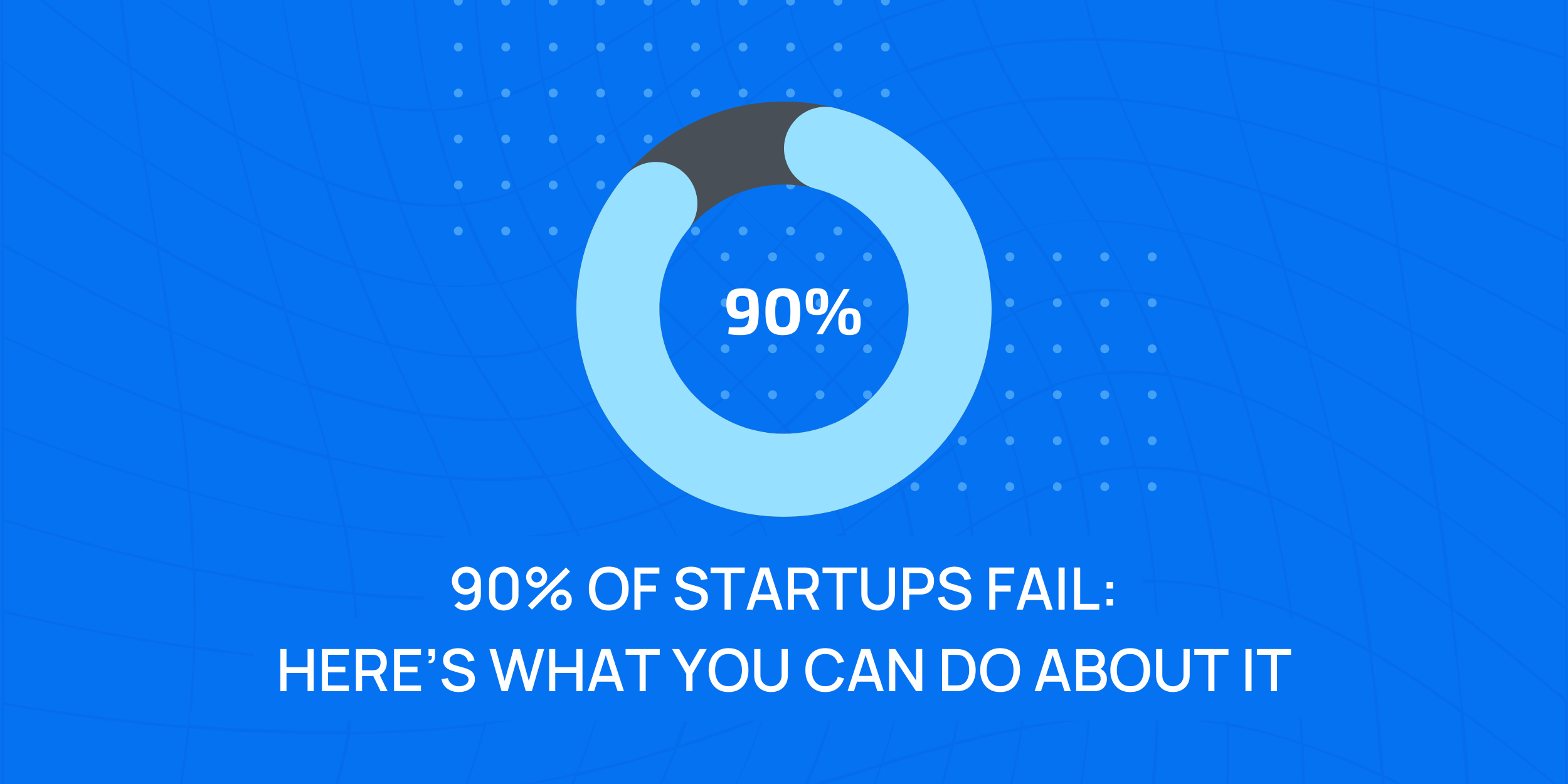
Why Your Open Source Startup Is Going To Fail (And What You Can Do About It)
As the open source movement continues to gain momentum, a growing number of entrepreneurs are launching startups centered around commercializing open source projects. However, the journey from open source project to profitable startup is fraught with potential pitfalls. In fact, according to various sources including Forbes, Investopedia, and Harvard Business Review, it is estimated that around 90% of startups fail.
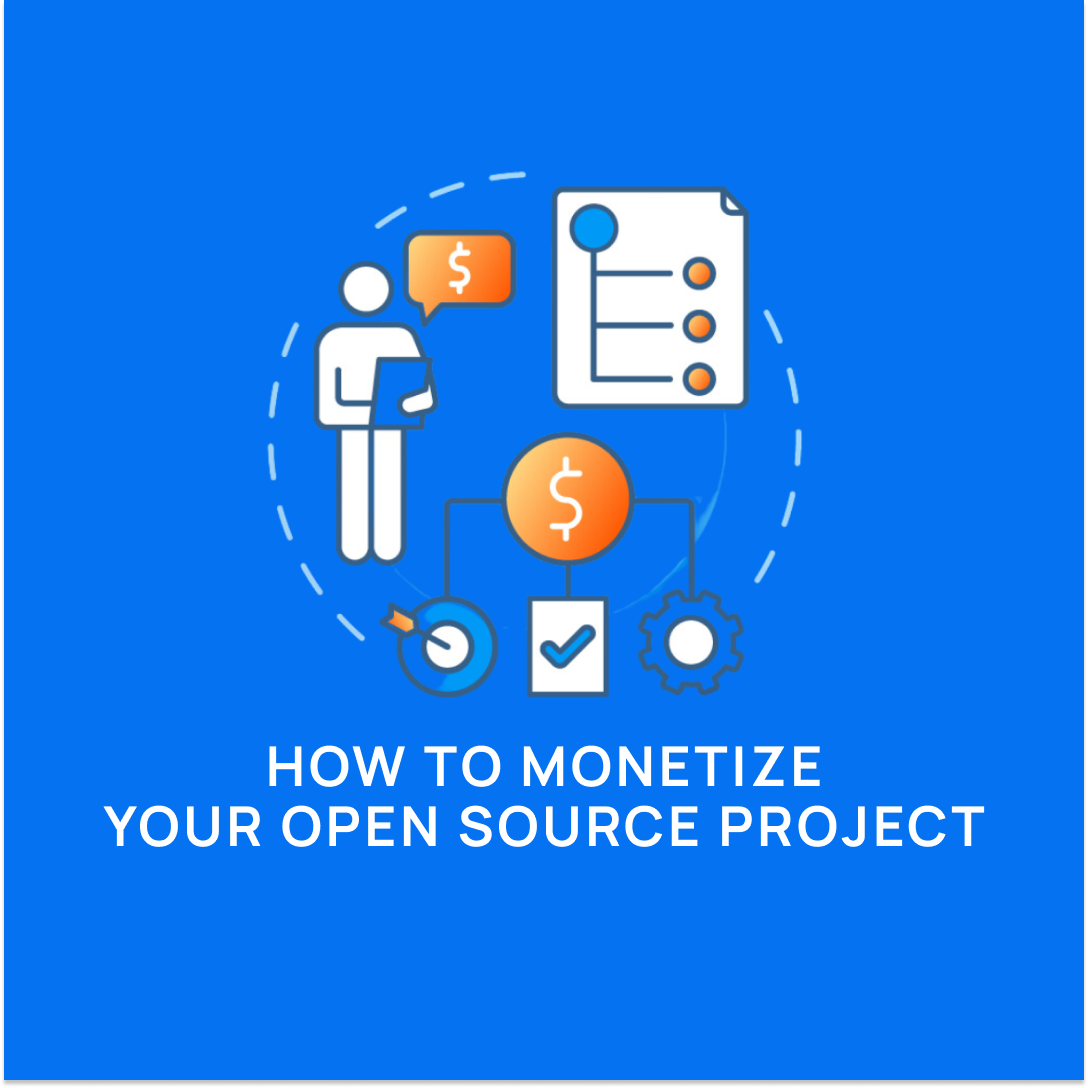
Open Source Monetization 101: A Step-by-Step Guide
Many people believe that making money from open source projects is an arduous or even impossible task. However, in this blog post, we want to debunk that myth and provide you with practical insights on how to monetize your open source projects successfully. By the end of this article, you'll have a clear understanding of the various avenues available to generate revenue from your open source projects.
The Open Source Sales & Marketing Funnel: Navigating the Challenges of Anonymous Downloads and Activity Tracking
Open source software (OSS) has emerged as a driving force in technology, permeating nearly every facet of software development. As this field grows, so too does the need for effective sales and marketing strategies that can navigate its unique challenges. Among these is the difficulty of identifying users and potential leads due to the typically anonymous nature of open source software downloads. This blog aims to break down the sales and marketing funnel specific to the OSS space, highlighting the importance of analyzing not only web and community activity but also download activity.
Harnessing Software Download Patterns: Using Open Source Download Metrics to Uncover New Users and Potential Customers
Did you know your user's download patterns can reveal a great deal of information on who your users are and how they are using your software? For instance, repeated downloads show continued usage or a slowing rate of download activity can show potential churn.. If you're not examining these patterns, you're potentially missing out. We have been working on discerning these patterns for a while now; let me show you a few things we learned and how we analyze downloads.
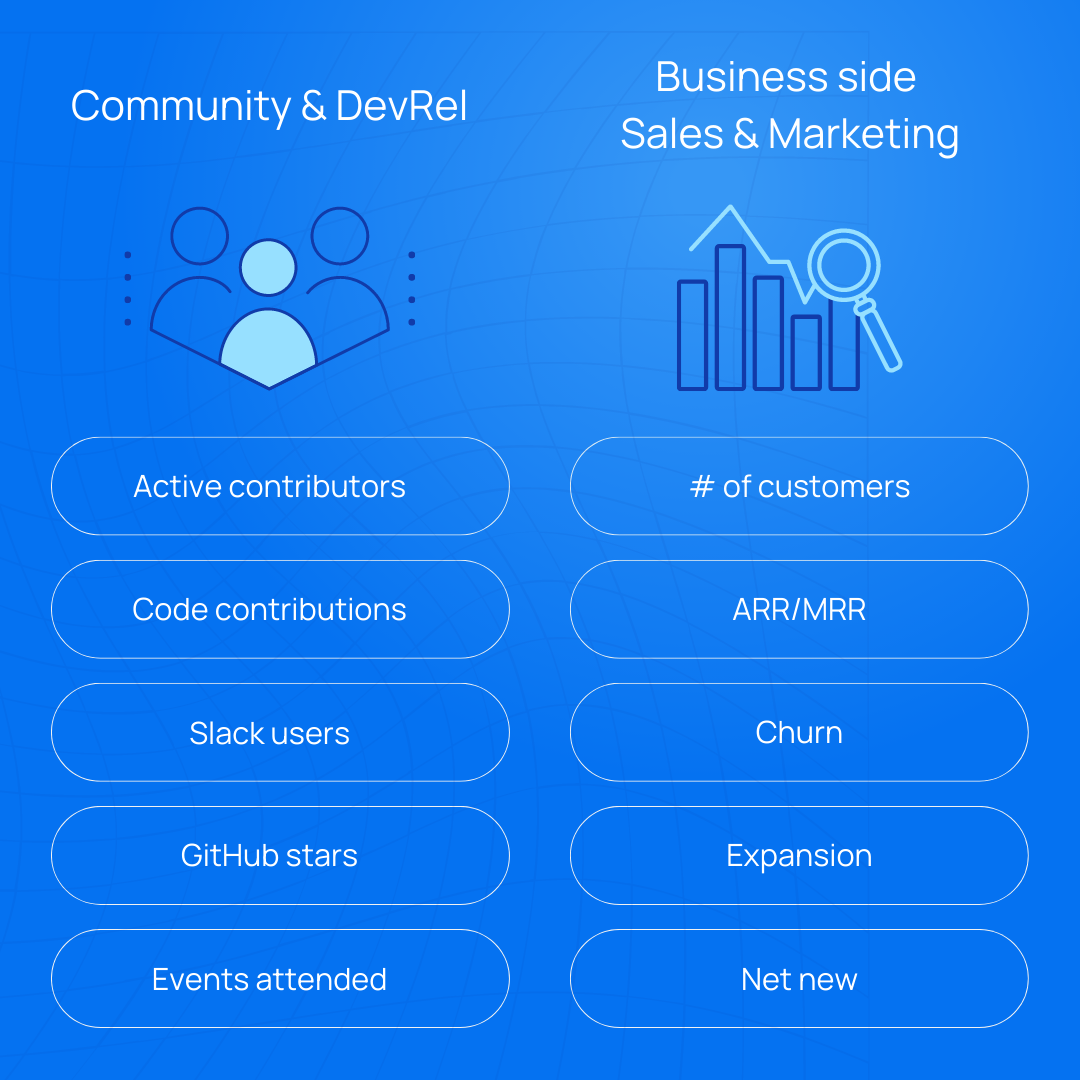
Connecting Community Efforts in Open Source to Business Success
As someone who's deeply involved in the open source community, I'm often asked how to measure the success of DevRel (Developer Relations) and community efforts. Many executives understand that community is vital for growth, but struggle to quantify its value in terms of ROI. This disconnect between community and business can be challenging. In this blog post, I'll discuss why this disconnect exists and how to bridge the gap between DevRel metrics and business success.
3 Keys to Growing the Adoption of an Open Source Project
The open source world has played a significant role in software innovation, giving birth to numerous popular projects with thousands or even millions of users. However, many of these projects find it challenging to expand their user base. If you're looking to create a commercial business around your open source project, you'll want to ensure it has a growing user community before diving in. So, how can you accelerate growth and pave the way for a potential commercial venture? This article will delve into three key factors for open source growth: building an amazing product, raising awareness, and making your product more user-friendly than alternatives. We'll also discuss ways to nurture a robust open source community and boost growth.
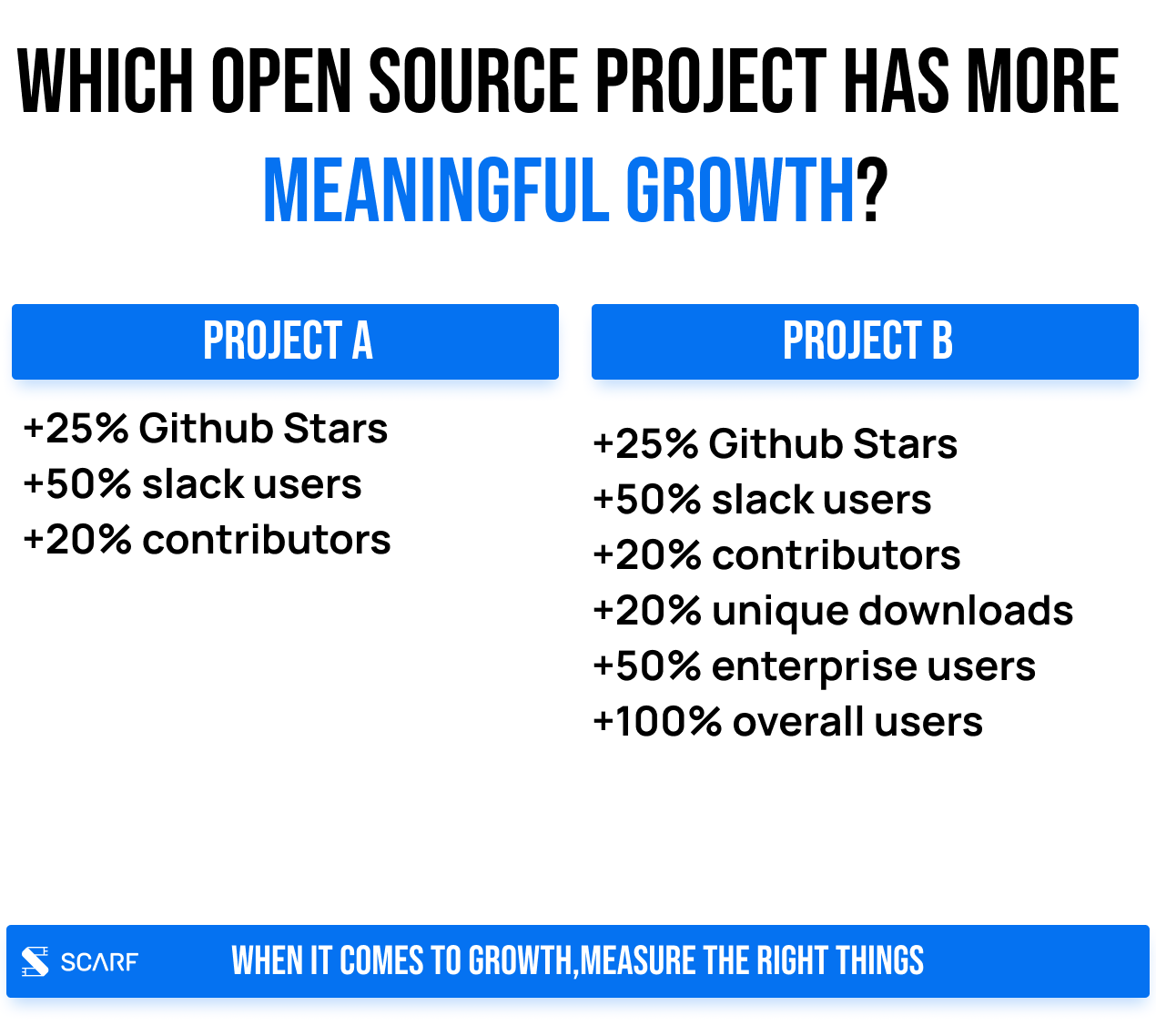
The Most Neglected and Overlooked Open Source Metric: Production Users
After speaking with hundreds of people in various roles working on large open source projects or at commercial open source software (COSS) companies, I have found that their perspectives on measuring growth and success vary a great deal. In fact, I am surprised that some people zero in on certain metrics and ignore many others. The one commonality is that they often fall short of grasping a complete picture. For instance, one executive may be hyper focused on the number of contributors, while another at a similar-sized company may be hyper focused on the number of customers.

Switching Container Registries With Zero Downtime
You can change the hosting provider of your packages, containers, and files without impacting the end user with Scarf.Scarf Gateway (available under the Apache 2 license at https://github.com/scarf-sh/gateway ) and our managed Scarf service are designed to provide you with an easy way to change out the back-end container registry, package location, or file hosting platform for your open source software. Scarf Gateway does this by creating a custom domain redirect to the channels distributing your software. If you find a provider not meeting your needs, simply update the endpoint, and all your users will continue using the same commands and destinations they used previously with no noticeable change.

Understanding Tech Layoffs and the Economy’s Impact on Open Source
The year 2022 saw over 15 million layoffs across more than 1,200 companies. That number shows no signs of slowing down with 441 companies having already laid off employees in 2023. Many of these companies have raised billions of dollars with cash still in reserve and initial hiring plans unfulfilled, yet one after another has axed a percentage of their workforce in what seems to be a spreading pattern.

Why Downloads are an Essential Metric for Open Source Software Projects
From operating systems to libraries, frameworks to middleware, applications, and beyond, open-source projects across different domains find themselves caring about all sorts of different metrics. Some domains of OSS will care about some metrics far more than others will. Language-level packages might pay close attention to their number of downstream dependents or contributors, while application developers may have more usage and end-user community-based interests.
The Open Source Business Metrics Guide 2024
Today, the most commonly accepted metrics for open source adoption and growth are heavily focused on the contributors and community (the idea is healthy contributions should equate to healthy adoption). While these are useful metrics, they are only part of the picture.

Alex Biehl: Open Sourcing a Tool to Generate Haskell Server Stubs
Scarf Sessions is a new stream where we have conversations with people shaping the landscape in open source and open source sustainability. This post will give a recap of the conversation I had with our guest Alex Biehl

Tanner Linsley: Building Sustainable Open Source Projects
Scarf Sessions is a new stream where we have conversations with people shaping the landscape in open source and open source sustainability. This post will give a recap of the conversation Scarf CEO, Avi Press and I had with our guest Tanner Linsley.

Stefano Maffulli: An Exploration on Standards for Open Source Packaging and Distribution
Scarf Sessions is a new stream where we have conversations with people shaping the landscape in open source and open source sustainability. This post will give a recap of the conversation Scarf CEO, Avi Press and I had with our guest Stefano Maffulli.
A Different Approach to Measuring Open Source Community Health
Community is important to the success of open source software. The health of a community can be measured in different ways depending on the stakeholders involved. To understand and grow a community, project founders and maintainers need visibility into various technical, social, and even financial metrics. These metrics are important because they can help projects form data driven decisions. But what metrics should we be using?

Scarf Tech Stack: Relude
At Scarf we love highlighting and using awesome open source projects. This blog post will talk about Relude, a project we use in the majority of our Scarf tech stack. For more information on the overall architecture we use to develop Scarf see our previous Scarf Tech Stack post.
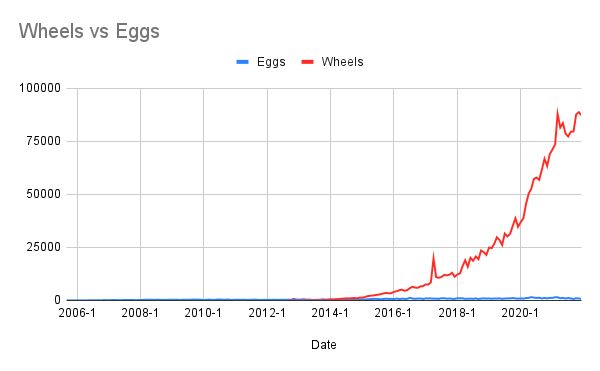
Python Wheels vs Eggs (And How Data-Driven Decisions Must Become The Norm in Open-Source)
This article was originally posted on Hackernoon.The world of software development is always evolving, and every now and then, you get to a moment in time when the path forks ahead of you. As developers, we have a choice as to which path to take, but each comes with specific consequences that impact the effectiveness and impact of the code going forward.
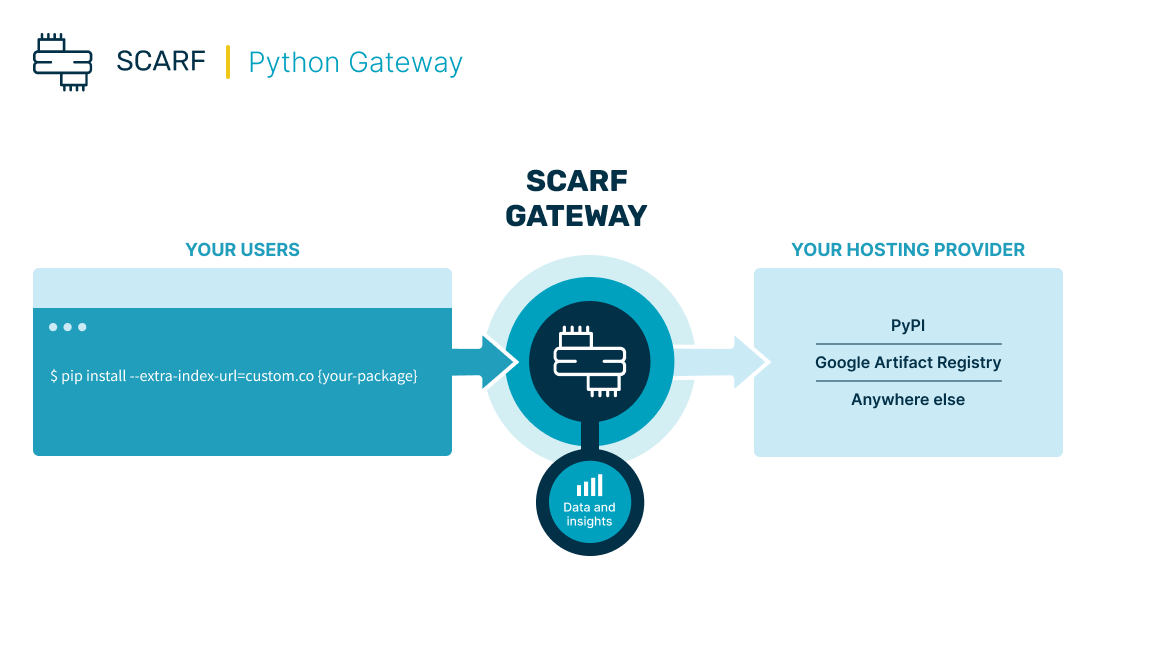
Announcing Python Support
To date, Scarf Gateway has natively supported Docker/OCI Containers, and arbitrary file archives via URL templates. Today, we’re excited to release support for our very first language-packaging ecosystem: Python.

Changelog: Company Identification Change
Hello Scarf Community! While checking your Package Insights, you may have noticed the appearance of “UNKNOWN” in the `Views by Company` section. In order to provide the most accurate company information possible, we’ve made some improvements to our data processing system and how we display our results.

Project Spotlight: Scarf Gateway Stats
This is the third post in our series from Scarf: Spotlights. In our previous post, we highlighted the awesome nix-community.

Scarf Will Block Package Downloads from the Russian Government
It has been deeply troubling to watch the current situation in Ukraine, from the terrifying threats from Vladimir Putin to online footage of bombings, shootings, and resulting damage. I can only try to imagine what Ukrainians are going through and feeling right now.

Changelog: New Pixel Snippet
Hello Scarf Community! 👋

Community Spotlight: nix-community
This is the second post in a new series from Scarf: Spotlights.

Changelog: Registry Validation for Auto-package Creation
Hello Scarf Community! We are excited to announce that the Docker Auto Package Creation feature now includes validation!

Three Ways to Build Better Products Through Analytics
At its core, developing successful products is a matter of listening to users and tuning everything to their needs. ‘Listening’ can be a misleading word however, as often users don’t tell you what they need explicitly — and that’s where analytics comes in. By gathering and analyzing information from within your product you can identify areas of focus and generate ideas on how to improve.

New Year, New Scarf Features
Today, we're launching some of the most frequently asked for features since we launched Scarf Gateway back in March.

The Scarf Tech Stack
At Scarf, we believe open source project maintainers need data in front of them in order to be proactive and do their best work. For example, they need data that answers questions like “how long does it take for our users to adopt a new major version?” To achieve that, we built a system for software distribution with a globally available architecture to passively capture this information and present it to maintainers.
OSS Project Spotlight: IHP
This is the first of a new series from Scarf: Project Spotlights. In each post, we’ll highlight an exciting open source project and the problems the developers are solving, how they are commercializing the project (if applicable), and how they are leveraging Scarf.
Measuring Downloads of Anything You Distribute
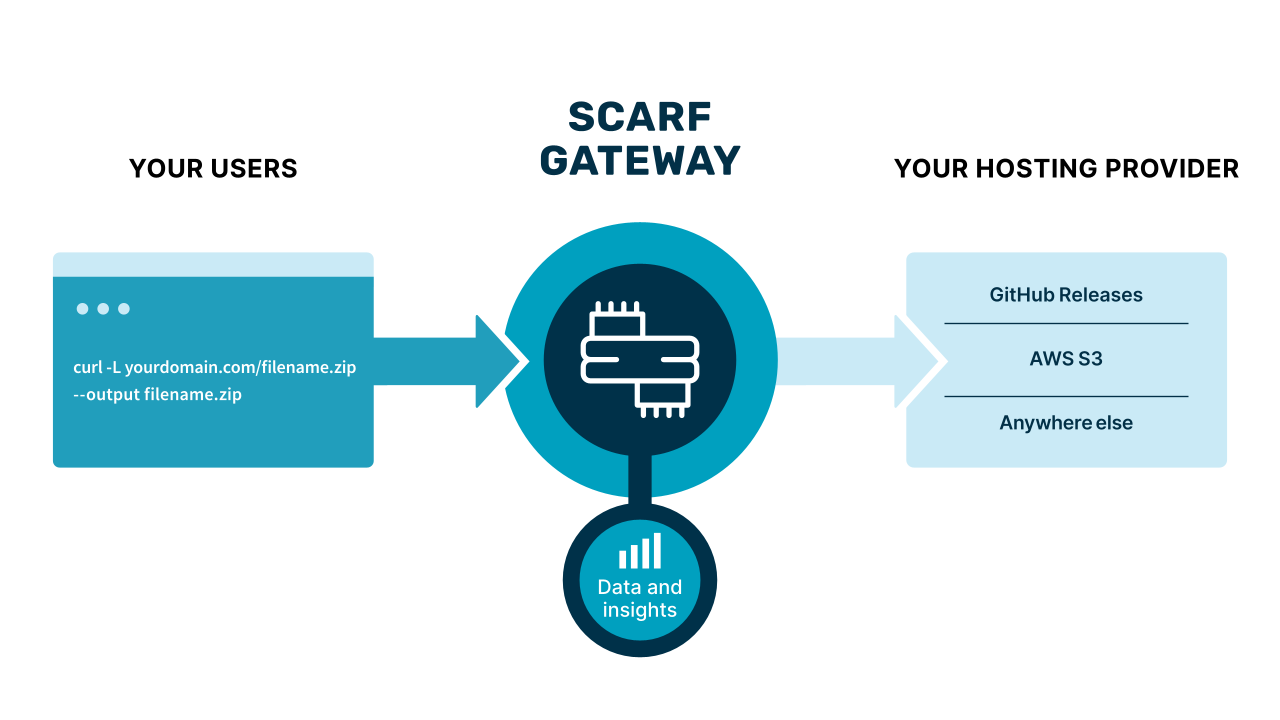
Back in March we first launched Scarf Gateway with support for Docker/OCI containers. No matter which registry your containers are hosted on, you can now host all of them through your own central endpoint, and have better visibility into that download traffic than any other registry on the market. All without ever having access to personally identifiable information or invading the privacy of your users.
Announcing The Scarf Gateway
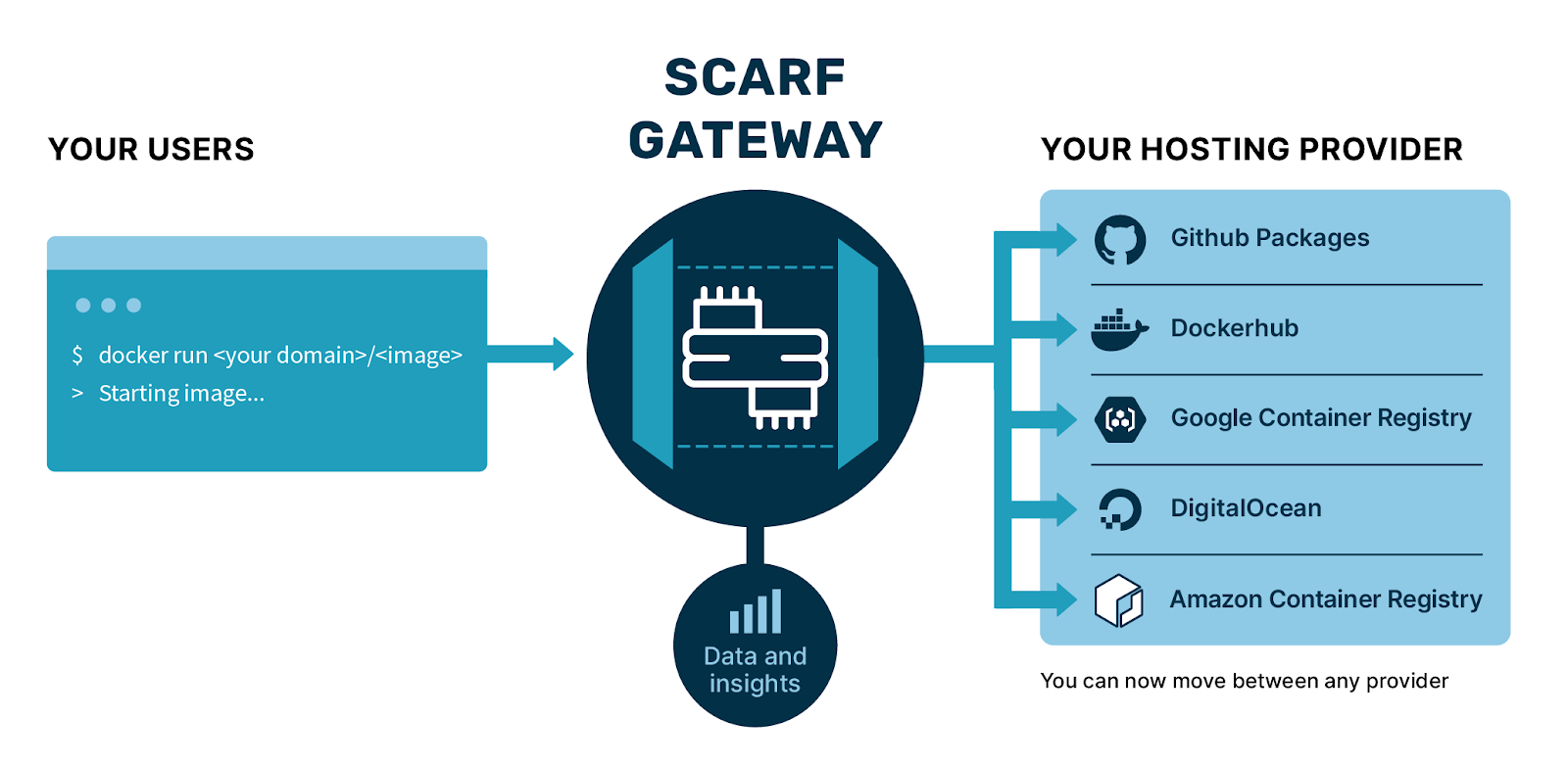
After half a year of hard work from everyone on our team, I'm thrilled to introduce a foundational piece of Scarf's toolchain for bringing observability to open-source software distribution.

Composition with Semantically Rich Names
In my previous post, I remarked on the fact that composition, while central to our work as engineers, is often poorly supported by the tools we use. In this post I want to explore a specific trend away from this state of affairs, where composition is given the first-class treatment it deserves.

Shea Levy, Composition Fanatic
Hello Scarf followers! I'm Shea, Scarf's new VP of Engineering. This post is to share some of who I am, what problems I'm interested in, and why that brought me to Scarf. I hope it gives you a sense of what this new role means for our mission to give open source maintainers observability into the distribution and usage of their projects!

Are Package Registries Holding Open-Source Hostage?
A few days ago, I received an email from Docker about a change I already knew was coming:
Are Package Registries Holding Open-Source Hostage?
A few days ago, I received an email from Docker about a change I already knew was coming:

Analytics and Open Source Sustainability
Last week, a discussion was sparked about Scarf's JavaScript analytics package, scarf-js. An issue was opened on GitHub and the discussion grew, ultimately moving into the Reactiflux Discord server with many people jumping in and voicing opinions on the topic. An excellent blog post from a scarf-js user, Erik Rasmussen, explained his perspective on this topic as an open-source maintainer. This post shares Scarf's perspective.
Analytics and Open Source Sustainability
Last week, a discussion was sparked about Scarf's JavaScript analytics package, scarf-js. An issue was opened on GitHub and the discussion grew, ultimately moving into the Reactiflux Discord server with many people jumping in and voicing opinions on the topic. An excellent blog post from a scarf-js user, Erik Rasmussen, explained his perspective on this topic as an open-source maintainer. This post shares Scarf's perspective.
